What most homes in Singapore really require isn’t any flower subscription but the proper one. What most people do wrong is that they go for any subscription that their friends recommend, only to find out that it doesn’t suit their lifestyle after six weeks of trying and quietly terminate it. The layout of this website revolves around this misconception. We will guide you through our product offerings, telling you who needs each of our 4 type of product, so that you can choose which product is right for you for the next three months.


If you know precisely what you need, move on to our products. Otherwise, keep reading.
Three questions that decide which subscription suits your home

How often are you actually home to enjoy them?

If you go out-of-town for work twice a month, you will have your flowers wilting away in an unoccupied flat during half their life. This is one practical consideration why you might prefer to pick orchids over cut flowers, since their flowers will last about 3 to 6 weeks per plant. If you stay mostly indoors in the evening and appreciate a weekly visual refreshment, then cut flowers are just fine.

Do you find arranging relaxing or stressful?

Certain individuals actually anticipate the process of unpacking a bouquet and determining how to arrange them in the most beautiful manner. For them, arranging becomes the core purpose of the subscription plan. Others simply wish a finished bouquet to grace the dining table without having to put effort into it. Whichever camp you may belong to, if you haven’t determined this yet, it’s safer to opt for pre-arranged bouquets because the downside of mismatching your preferences is a countertop covered in stems.

Do you want flowers, plants, or both?

Most of the customers sign up thinking that they require flowers exclusively and discover after some months of use that all they needed was the other type of plant altogether. Flowers cannot completely take the place of live plants because they perform different tasks in terms of visual appeal, which is why many homeowners in Singapore combine the two types of plant subscription service.

The four subscription types, compared honestly

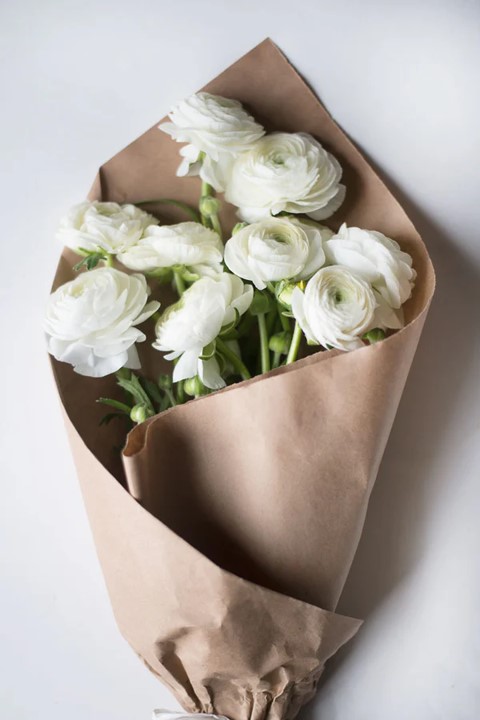
arranged flower arrangement scheduled delivery

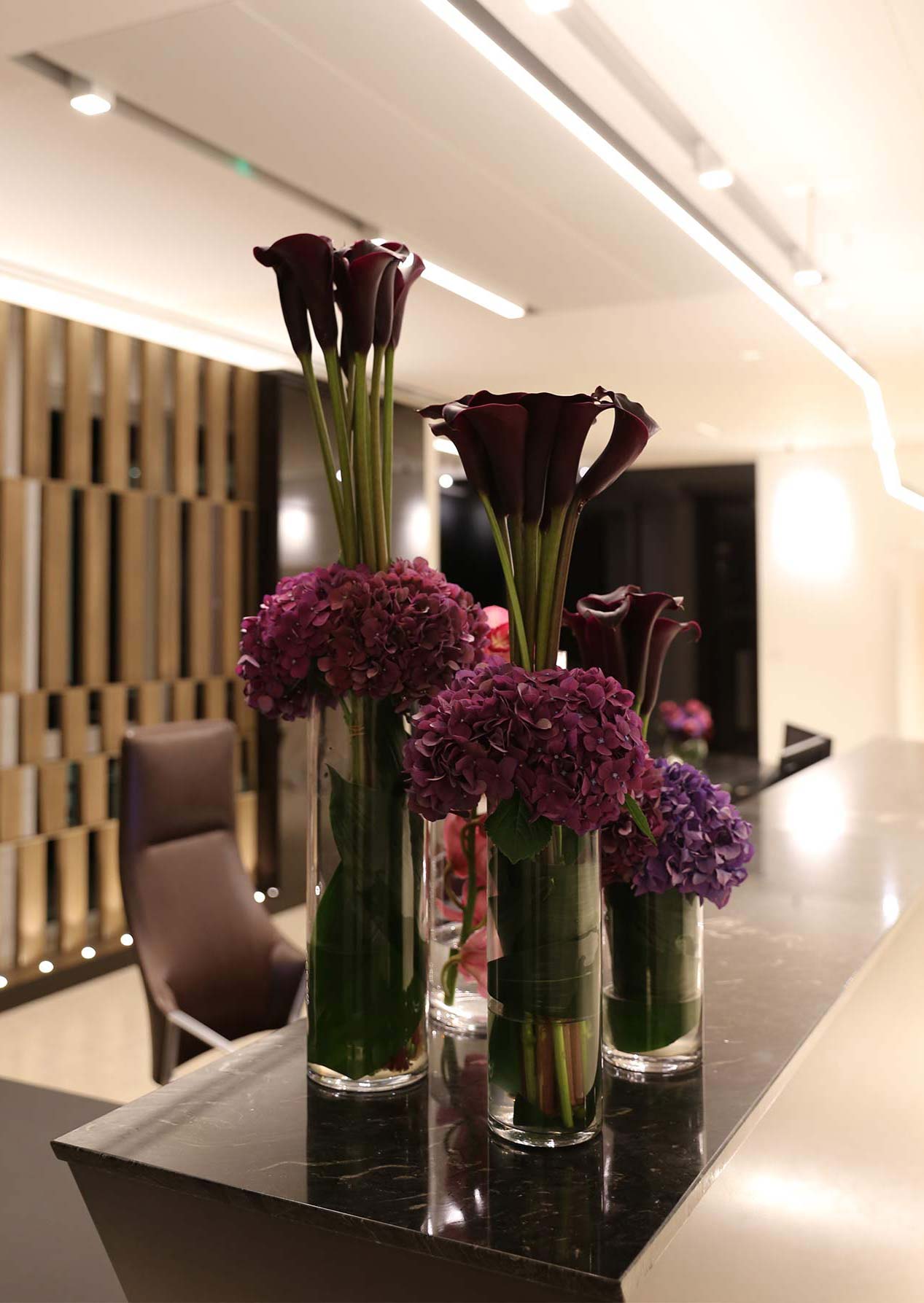
Florist-styled arrangements ready to display

If you’re into: getting your house filled with fresh flowers, you can afford some premium service, you don’t feel like arguing with your partner regarding design choices. You just want them all sorted for you for the price.
Cost tradeoff: you’re giving more money for the convenience of having someone else to arrange your flowers.
To find out more: arranged subscription

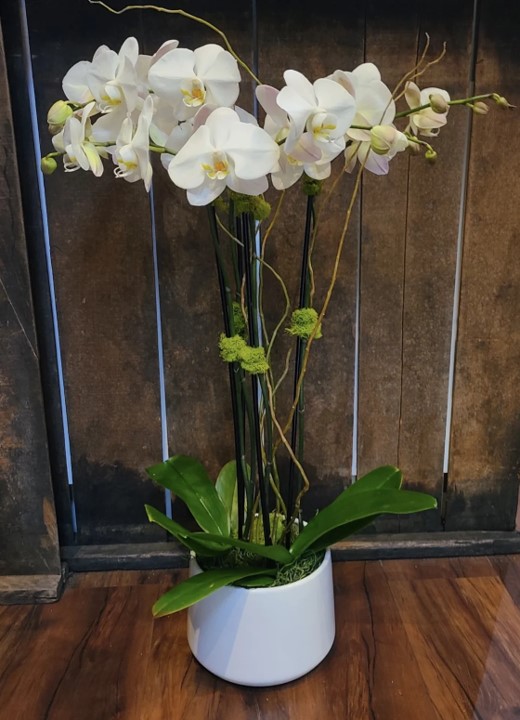
orchid plant rental subscription delivery singapore (9)

Phalaenopsis orchid rotation

If you did the calculations about cost per bloom days and concluded that you simply don’t need a new arrangement every single week, you travel quite a lot and thus lose a lot of cut flowers to waste, you live in a condominium or an HDB with limited Bright south-facing light, therefore most of the flowering plants don’t thrive here.
Phalaenopsis orchids being a rare exception to this rule.
To find out more: phalaenopsis subscription

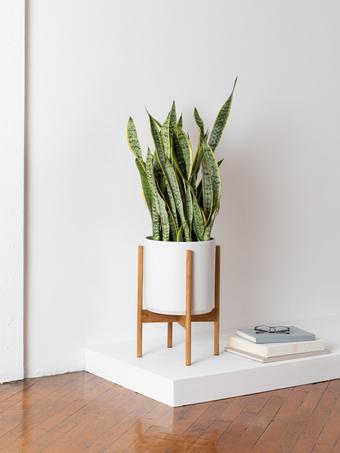
Live plants chosen for your environment

If you’re into: getting greenery inside your house but not flowers, you tried and failed several times at keeping indoor plants alive, you’re looking for finished interior without having to become a hobbyist. It should be noted that it isn’t a flower subscription, as opposed to other options – it’s a plant subscription. It also runs on a quarterly basis rather than weekly.
To find out more: live plant subscription

Fresh stalks for arranging yourself

If you’re into: you find it relaxing to engage in creativity, you have a vase to use, you’re one of those people who’ve always watched florists at work and found it soothing.
Cost tradeoff: you give up fifteen to twenty minutes of your time when the flowers come.
Per stalk you’re getting more flowers for the price of your subscription compared to arranged flowers.
To find out more: loose stalk subscription

Combining subscriptions — what most home subscribers actually do

Fortnightly arranged flowers plus quarterly plant refresh

This option is the most popular. Flowers are scheduled for weekly renewal while plants provide a more gradual background change within the house. These schedules do not conflict with each other since they address different issues.

Monthly orchid rotation plus weekly loose stalks

This option is best for houses where one truly appreciates flower arrangements. The orchid is always the fixed background element while loose stems constitute the weekly design task. This option is favored by those who would like to replace their practice of buying flowers from local florist shops on weekends.

Quarterly plants only

There are some houses which prefer plants and do not need flowers. A quarterly live plants plan is all what is required – there is no need for flowers in order to decorate your home.

When a subscription isn’t the right answer

We’re going to be honest about this because it saves both of us time. A flower subscription is the wrong choice if:

  • You only want flowers occasionally, for specific moments. One-off bouquets are cheaper and more meaningful than a paused subscription
  • You’re testing whether you like flowers in the house at all. Buy one bouquet from a market florist for two or three weeks before committing to a recurring subscription
  • Your living situation is changing in the next month or two. Wait until you’ve moved, the renovation is done, or the new flatmate has settled in
  • Budget would be a real stretch. There are seasons of life where a subscription doesn’t fit, and that’s fine

Ready to choose

Most home subscribers fall into one of four starting positions. Pick the one that sounds most like you and follow the link to the right product hub:

  1. “I want fresh flowers without thinking about them.” Start with our arranged subscription, fortnightly standard size.
  2. “I want to arrange them myself, it sounds calming.” Start with our loose stalk subscription, fortnightly regular size.
  3. “I travel a lot and don’t want flowers wilting unseen.” Start with our phalaenopsis subscription, single plant.
  4. “I want greenery, not blooms.” Start with our live plant subscription, starter tier.

How our subscription is done

When you travel

You can pause, skip, or change delivery dates 3 days in advance using WhatsApp. No costs involved, and there is no minimum number of deliveries other than the first one. Long-term traveling? Phalaenopsis subscriptions will suit longer absence periods better than cut flower subscriptions.

During festive periods

Chinese New Year, Hari Raya, Deepavali, and Christmas can be customized according to your preference: alternative color schemes, bigger size if used for hosting purposes, and even auspicious flowers when requested. Just inform us about the festive periods that interest you at the sign-up stage.

When you move home

A new address can be provided 1 delivery in advance. We will change the size of the plant/vase depending on the lighting/scale of your new home.

Practical considerations for HDB, condo, and landed homes

HDB

The vast majority of HDB flat are equipped with only moderate lighting, central air conditioning in certain rooms but not in others, and minimal surface area. Standard-sized arrangements or standard phalaenopsis subscriptions tend to suit them well. Arrangement categories like statements are always disproportionate in a HDB flat.

Condo

Condos can range drastically from one side of the apartment block to another, in terms of lighting conditions. However, while other types of flower arrangements would struggle to flourish, the phalaenopsis is fairly tolerant of these fluctuations, thriving even when the living room does not get any direct sunlight at all for six to eight weeks.

Landed

Generally, landed homes feature higher surface area and better lighting conditions; thus, arrangement sizes that fall into the premium and statement categories, as well as double or triple phalaenopsis, are feasible. It seems that nearly all landed home subscribers end up subscribing to two or three different product lines at once.